Why Pretend Play Is So Important for Childhood Development
When a child pretends to cook a meal or care for a doll, they are doing much more than playing — they are understanding the world around them.
Pretend play is a powerful tool for emotional, social, and cognitive development, and it plays a vital role in early childhood.
What Is Pretend Play?
Pretend play, also known as imaginative or role play, allows children to recreate everyday situations through play.
Examples include:
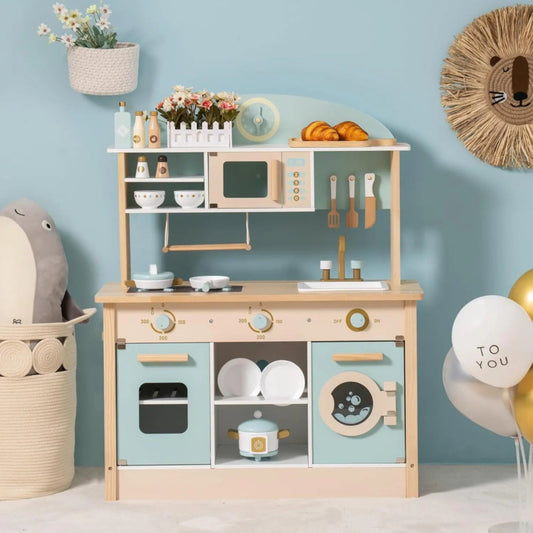
- Play kitchens and food sets
- Tool benches and workstations
- Dolls, figures, and family play
Through these moments, children express feelings, ideas, and experiences.
Emotional and Social Benefits
Pretend play helps children:
- Understand emotions
- Practice empathy
- Communicate ideas
- Learn cooperation
By acting out real-life scenarios, children process experiences and learn how to interact with others.
Creativity and Problem-Solving
There are no rules in pretend play — only imagination. Children learn to:
- Create stories
- Solve simple problems
- Adapt to new ideas
This freedom strengthens creativity and flexible thinking.
Creating Space for Imagination at Home
Simple, open-ended toys create the perfect environment for imaginative play. At Toosly, our pretend-play collections are designed to inspire storytelling, connection, and joyful learning.
Because when children imagine, they grow.